400-600-8767
 export@labonce.com
 ch
ch en
en


When equipping a new laboratory or scaling up testing capacity, procurement managers and laboratory technicians frequently encounter a common equipment dilemma: Should we invest in a Constant Temperature Chamber or a Temperature Incubator?
While both systems are engineered to control thermal environments, they serve entirely different physical and biological testing standards. Choosing the wrong equipment not only risks experimental failure but can also lead to premature compressor wear or sample degradation.
Below, we break down the core engineering differences, thermodynamic principles, and application scenarios to help you make a data-driven decision for your facility.
1. Defining the Core Purpose: Industrial Stress vs. Biological Growth
The fundamental distinction lies in what happens inside the workspace.
-
A Constant Temperature Chamber (often categorized within broader environmental test chambers) is an industrial-grade thermal simulation tool. It is engineered to subject materials, electronic components, or packaging to prolonged, rigorous thermal stress across a wide temperature spectrum.
-
A Temperature Incubator is a life-science instrument specifically optimized to cultivate, maintain, and protect living biological cultures—such as bacteria, fungi, cell lines, or tissue samples—under highly stable, low-stress conditions.
2. Airflow Dynamics: Forced Mechanical Convection vs. Gentle Air Circulation
The physics of heat transfer inside these units dictates how they treat your samples. This is where incorrect selection often ruins delicate experiments.
Constant Temperature Chambers
To maintain extreme spatial uniformity across high-density loads, these chambers utilize heavy-duty mechanical convection (forced air circulation). Internal wind tunnels and robust blowers continuously drive heated or cooled air through the workspace. This high-velocity airflow ensures that even when the shelves are tightly packed with industrial components, every single item experiences identical thermal conditions.
Temperature Incubators
Biological specimens are highly sensitive to airflow. High-velocity air causes rapid evaporation and desiccation (drying out) of agar plates and liquid cultures. Therefore, precision incubators utilize gentle air circulation or natural gravity convection. The airflow is meticulously balanced to prevent temperature gradients while ensuring zero moisture loss from your biological matrices.
3. Technical Parameters Side-by-Side
To provide a clear engineering reference, the table below outlines the standard hardware and performance variances between a industrial constant temperature chamber and a standard microbiological laboratory incubator.
| Technical Parameter | Constant Temperature Chamber | Temperature Incubator |
|---|---|---|
| Standard Temperature Range | Extended: −20∘C to 150∘C (or wider) | Narrow: Typically 5∘C to 65∘C |
| Control Accuracy / Fluctuation | ≤±0.5∘C | ≤±0.2∘C to ±0.3∘C |
| Spatial Uniformity | Rigid distribution via forced air (≤±1.0∘C) | Micro-flow optimized (≤±0.5∘C at biological zones) |
| Primary Mechanism | High-powered heating elements + Cascade compressor options | Balanced PID heating + Mild thermoelectric or single-stage cooling |
| Sample Vulnerability | High tolerance (metals, polymers, electronics) | High sensitivity (cells, media, volatile cultures) |
4. When to Deploy a Constant Temperature Chamber
If your laboratory protocol involves physical material testing or strict industrial standards (such as ASTM, IEC, or ISO), a Constant Temperature Chamber is the correct hardware choice.
Key Applications:
-
Thermal Aging Tests: Assessing how polymers, plastics, or rubber compounds degrade when exposed to continuous heat over hundreds of hours.
-
Electronic Component Reliability: Testing semiconductors, circuit boards, or automotive sensors at steady elevated or sub-zero temperatures.
-
Large-Scale Packaging Evaluation: Simulating storage conditions for industrial containers where raw structural volume and uniform heat penetration are required.
5. When to Deploy a Temperature Incubator
For life science, clinical diagnostic, and pharmaceutical quality control applications where living organisms are involved, a specialized Temperature Incubator is mandatory.
Key Applications:
-
Microbiological Cultivation: Growing bacterial or fungal cultures at optimized physiological temperatures (typically 35∘C to 37∘C).
-
BOD Testing (Biochemical Oxygen Demand): Environmental water testing requires cooled incubators maintained precisely at 20∘C to monitor organic waste breakdown without disturbing fluid dynamics.
-
Food & Beverage Quality Control: Incubation of samples to test for spoilage organisms, pathogens, or shelf-life safety under stable biological parameters.
The Labonce Engineering Solution
At Labonce, we engineer specialized equipment tailored to these exact distinct needs rather than offering a one-size-fits-all compromise.
Our industrial-grade Constant Temperature Chamber lines utilize advanced programmable PID controllers and robust refrigeration loops to handle aggressive thermal profiles with zero temperature drift.
Conversely, our Temperature Incubator and Biochemical/Mold Chamber series are constructed with specialized micro-breeze air jackets and internal glass observation doors. This allows technicians to inspect cultures without disturbing the critical internal micro-climate, completely eliminating sample desiccation risks.
Before finalizing your laboratory layout, analyze your sample matrices. If your workflow demands high-velocity thermal uniformity and wide temperature stress capabilities, opt for a chamber. If your focus is stable, evaporation-free biological growth, an incubator is your ideal asset. Contact a Labonce application engineer today to match your specific testing protocols with our verified equipment specifications.
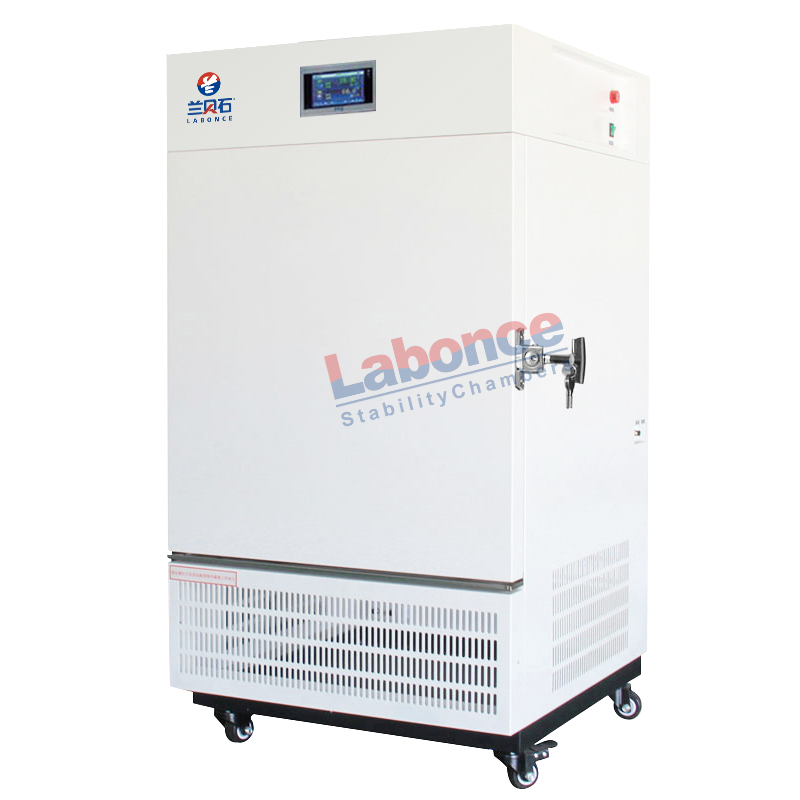
Labonce Constant Test Chamber 500CH